
A line of thunderstorms crosses Fort Bend County after dark. By morning the yard in Sugar Land has a few branches down, and the roof looks fine from the driveway. Wind damage roof problems often start exactly like this, with nothing obvious to see.
Nails and Sealant
Every asphalt shingle is nailed along its upper edge. The row above covers those nails. A tar strip on the back of each shingle softens in the Texas sun and glues its lower edge to the row below.
What a Gust Does
Fast air moving over the roof drops the pressure on top of the shingles. Underneath, the pressure stays higher. That difference pulls upward, hardest at the eaves, the rake edges and the ridge. When the pull wins, the tar strip lets go.
A shingle that has lost its seal can drop back flat. From the street it looks normal. In the next storm it flaps again, bending along the same line, and eventually it creases or tears.
How Water Gets In
Rain blown sideways slips under the loose edge. It reaches the underlayment first, then the plywood decking. Weeks later, a brown ring shows up on a bedroom ceiling.
Signs to Look For
Roof Masters lists these on its storm damage page:
| Sign | Where it shows |
| Lifted or missing shingles | Eaves, rakes, ridge |
| Granules in gutters | Downspout outlets |
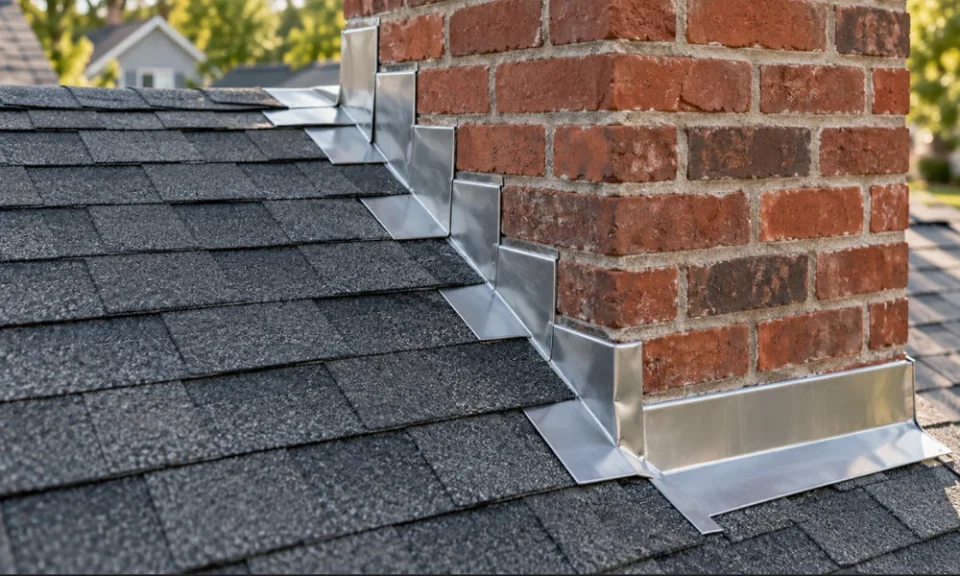
| Loose flashing | Chimneys, walls, vents |
| Water stains | Top-floor ceilings, attic |
| Debris on the roof | Valleys, low slopes |
The Inspection
An inspector walks the roof and lifts shingle edges by hand to test each seal. Photos record every damaged spot. Coverage depends on the insurance policy and the cause of the damage, and Roof Masters offers insurance claim assistance.
Roof Masters inspects roofs in Sugar Land, Katy and Missouri City Monday through Saturday, 8 a.m. to 5 p.m., runs emergency service 24/7 and gives a free estimate after every inspection. Call 281-215-5225.
