
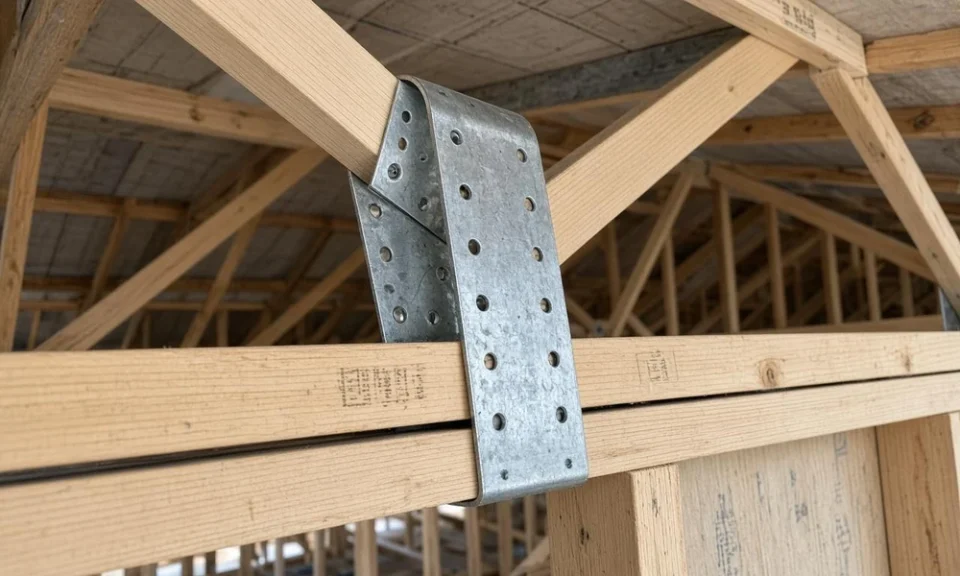
When strong wind blows over a house, it tries to lift the roof straight up. Hurricane straps are metal connectors that tie the roof framing to the walls, so the roof and the house act as one unit instead of two separate pieces. In a state like Florida, that connection can make a real difference during a storm.
Most straps are made of galvanized steel. They wrap over or around each roof truss or rafter and are nailed into the top of the wall. Some homes use clips, while others use single or double wraps. The type matters, because some connections resist uplift better than others.
Many older homes were built before these connectors were common, so homeowners often don’t know what they have. The easiest way to find out is to look in the attic where the trusses meet the walls, or to have a professional check during an inspection. A wind mitigation inspection also records the roof-to-wall connection, and some insurers use that report when setting rates.
Straps are not the only part that matters. Nails, deck boards and edges all play a role. A roof is only as strong as its weakest link. That is why a full check is better than a quick look.
If the roof is being replaced, it can be a good time to look at the whole roof system, including the decking, underlayment and how the roof is fastened. Florida’s building code sets rules for this work, so a licensed roofer should handle it and pull the right permits.
Homeowners around Largo and the wider Tampa Bay area can schedule a free roof inspection with Blue Shield Roofing to learn more about their roof’s condition before the next storm season arrives.
