
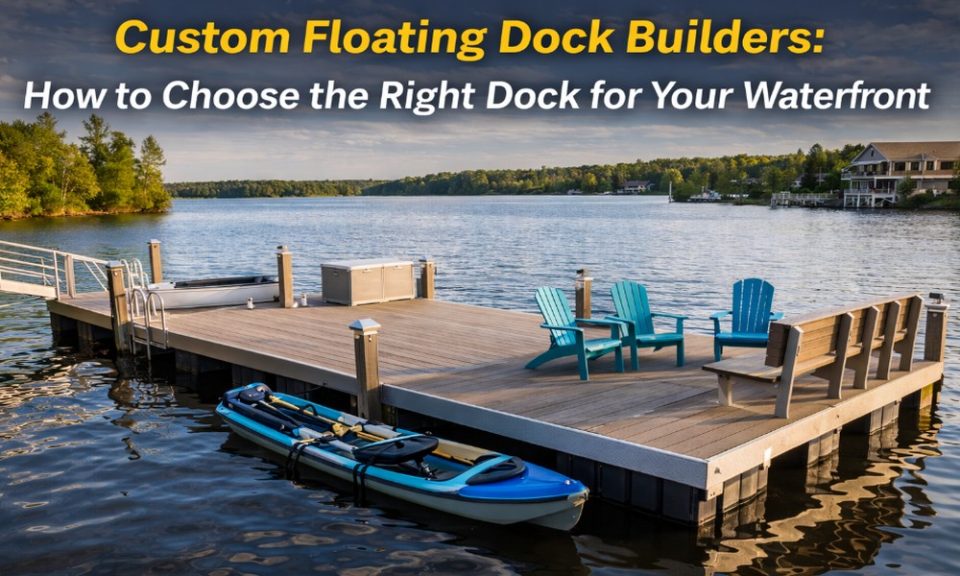
If people are seeking the best custom-designed floating dock builders they’re usually not looking for the perfect dock. They’re trying to solve an actual problem with the waterfront. The shoreline may change significantly. Perhaps the depth of the water is not consistent. The old dock may feel unsteady, has a worn-out look or simply doesn’t seem to be in line with how the property is utilized.
This is the reason why this decision is more important than most people consider. A dock is more than an island floating on water. It is a part of everyday life. It is where people get into or out of their boats relax with their families, wash equipment and tie up watercraft or sit for a few minutes and gaze at the ocean. When the dock appears sloppy or small, not properly anchored or made of the wrong materials, you will feel it very quickly.
This is the area where floating dock builders who are custom-built could make a significant difference. A custom-designed dock is built on the property, the conditions on the water, as well as how the owner plans to utilize it. It’s not just about aesthetics. It’s about comfort, function and value over the long term.
We at Supreme Floating Docks, we know that picking the right dock can be exciting and daunting at the same time. There are a lot of choices than many people imagine. Size, layout materials, anchoring accessories shoreline conditions. This adds up. This guide explains it in simple terms, so you can make the right decision without getting lost halfway through.
Key Takeaways
- A floating dock must be in line with your shoreline, the depth of water and the daily usage
- A good dock design starts with function, not appearances
- Custom-designed layouts can be more efficient than a one-size-fits-all solution.
- Dock materials influence the maintenance, longevity and even comfort
- Anchoring is just as important as the dock’s surface
- Commercial floating docks and commercial floating docks can be used for different purposes.
- Modular docking systems for floating allow for flexibility in future modifications
- The best builder should be able to be able to answer all the questions you have before making a recommendation for the design
What Do Floating Dock Builders Actually Do?
Many people believe that floating dock builders build up parts and put it on top of the waters. This is a part however, there’s more to it beyond the aforementioned.
Custom floating dock builders who are good can do more than construct platforms. They analyze the area and water movement, the shape of the shoreline, boating requirements access points, as well as safety issues. They determine what type floating dock layout is appropriate for the site instead of simply selling the same dock to all.
It can also include:
- Looking at the depth of water and its fluctuation
- making the right size and shape
- recommending proper floating dock materials
- choosing among a variety of floating dock anchoring dock anchoring systems
- Map entry points and tie-up zones
- making plans for future additions as well as floating dock accessory
A builder can help build the system that is not only the surface. It is my opinion that this aspect gets neglected sometimes. We see the dock in its final form but not the work that went into it.
Why Are Custom Floating Docks Better Than Standard Layouts?
Standard docks are a good choice in certain situations. When the coastline is straightforward and the use is simple A more simple design may suffice. However, many waterfronts aren’t straightforward. The water levels fluctuate. Shorelines curve. Boat sizes vary. Families dock in various ways.
A lot of people seek out customized floating dock designers as they are aware that an ordinary setup won’t be able to solve the problem. They are looking for something that feels designed specifically for their space as it’s.
Custom-designed floating docks provide you with greater control over:
- Walkway width
- slip placement
- Platform spacing
- access to kayaks and jet skis
- Swimming areas
- Lounge or seating zones
- future expansion
It’s all about flexibility. A dock must be designed to fit the way you move around, how you secure your boat, and the way you make use of the water. If you are a frequent fisherman then your requirements could differ from those who entertains guests a lot. If you have kids around the area, safety and space could be even more important. A customized setup could take into account these details in a way that preset options typically can’t.
What Floating Dock Materials Last the Longest?
This is among the most frequently asked questions, and with good reason. The dock’s materials affect how it appears and feels underfoot the dock, how much maintenance it will require in addition to how well it lasts for over time.
The most effective custom floating dock builders will inquire about the conditions, such as sun exposure, freshwater or saltwater conditions, and maintenance needs before recommending the best the materials. This is because there’s no one-size-fits-all solution for every home.
Common floating dock materials include:
- aluminum frames
- composite decking
- wood that has been pressure-treated
- Polyethylene or plastic floats
- stainless or galvanized hardware
It is popular since it generally requires less maintenance and has an elegant, modern appearance. Aluminum framing is usually regarded because of its strength and resistance against corrosion. Wood still looks stunning, however it will require more frequent maintenance and this is especially true when you are looking for something that is easy to maintain.
Sometimes, people make their decisions by appearance first which is fine. But I believe long-term maintenance will probably be more significant than most people imagine. A dock that is attractive for a season, but then becomes a burden after could be a bad option pretty quickly.
How Does Floating Dock Design Affect Daily Use?
The design of a dock is the basis for every aspect of the dock. It determines the ease of docks to walk across as well as how secure people can navigate around it, and how well it functions with boards, boats, or any other watercraft.
A great floating dock design should be easy to use. It shouldn’t create awkward turns, narrow passes, or atypical entrance angles. The platform should be designed to support the way people actually make use of waterways, and not just how an overall plan states it ought to.
Here are some practical design elements that are important:
- Wider walkways to facilitate movement
- solid platforms for loading and boarding
- specially designed corners for seating or for relaxing
- more secure edges for children or guests
- Clean traffic flows between the water and land
- place for ladders, cleats and other items without clutter
This is where floating dock layout concepts are extremely useful. The layout can be designed around the needs of boating, swimming access, space for gathering, or perhaps the most beautiful view of sunset. This may sound personal, but that’s exactly the point. Waterfront projects are private.
What Should You Know About Floating Dock Construction and Installation?
The majority of people focus on the look and style of docks, but don’t think about the construction of a floating dock. However, how the dock is constructed affects the performance, longevity as well as security.
Expertly constructed floating docks generally discuss frame strength the float capacity, frame strength, decking support, connection points and installation requirements specific to the site prior to launching the construction. This is a positive indication. It suggests they’re considering the structure and not just the selling pitch.
When installing floating docks there are a few things that must align properly:
- Measurements of the site
- Access to the shoreline
- Placement of floats
- Connector alignment
- anchoring set-up
- Gangway transition
- Hardware fit and finish
A dock that looks attractive but moves too much and is slouched in awkward places or wears unevenly is not a great idea. The installation is crucial because it transforms the concept into a real. If this step is not done properly then the entire project will appear sloppy even if materials are of good quality.
Are Modular Floating Dock Systems a Smart Option?
In a lot of cases there is a yes. modular floating docks could be a great option for those who need flexibility. They are constructed of connected parts, which could allow you to expand, change configurations or fix components later on.
This doesn’t mean that modular is the best choice for every circumstance. It works well for a variety of waterfront properties, particularly where the needs can evolve over time.
Custom floating docks are not all the same. builders are able to describe this clearly However, modular docks can be helpful in:
- to add more space in the future.
- Adjusting layouts as boats change
- making certain repairs simpler
- creating separate zones for different activities
- Making phased upgrades simpler
This can be particularly beneficial for families that are growing and waterfront businesses as well as owners who aren’t ready to build the most expansive dock today. There’s something appealing about being able to grow instead of attempting to anticipate each future requirement in one shot.
How Do Floating Dock Anchoring Systems Work?
A floating dock can only be dependent on the manner in which you secure it. This may sound a bit exaggerated but it’s the truth. If anchoring isn’t correct the dock can be prone to slipping, bending, or shifting too far, or wear out faster than anticipated.
This is the reason why the custom-designed floating dock manufacturers frequently suggest different anchoring methods based on the water’s conditions. Active and calm waters don’t behave in the same way. Also, tidal zones and more stable inland locations.
Common anchoring systems for floating docks could comprise:
- piling guides
- anchors that are deadweight
- Chain and anchor systems of chain and anchor
- Connectors for stiff arms
- shoreline tie-backs
The ideal setup is contingent on a variety of aspects:
- water depth
- Wave action
- Current movement
- Bottom conditions
- seasonal changes in water
- Dimensions of the dock and weight
Anchoring isn’t the flashiest aspect of the job However, it is an extremely vital elements. The decking is usually noticed first. I understand this. But, the secret support system helps the dock remain stable every year.
What Is the Difference Between Residential Floating Docks and Commercial Floating Docks?
This is important because goals of design can be completely different. The majority of floating docks in residential areas are designed for personal usage, relaxation, comfort and moderate access to boats. Commercial floating docks usually have to cope with heavier traffic, more stringent safety requirements and more abrasive wear.
The most effective Custom floating dock builders will ask what the dock is going to be used prior to proposing layouts or features. A dock that is designed for private homes is not required to have the same layout that is used for rental, traffic in marinas or frequent public access.
Priorities for residential docks could comprise:
- Comfort
- Appearance
- Access to the pool
- Family-friendly movement
- kayaks or small boats for make use of
Priorities for commercial docks could comprise:
- more durability
- heavier load capacity
- Access paths with greater width
- stronger tie-up points
- less maintenance
- Code and safety concerns
There is overlap, naturally. Some residential properties need serious performance. Commercial spaces too require an elegant appearance. However, the purpose will determine the design at the very beginning.
Which Floating Dock Accessories Are Actually Worth Adding?
Accessories can make docks more functional, but adding too many accessories can create clutter. It is therefore important to pick the right ones.
The most useful floating dock accessories comprise:
- Cleats
- bumpers
- swim ladders
- benches
- kayak launches
- Storage boxes
- Fish cleaning stations for cleaning the fish
- lighting
- Safety rails are installed in certain zones
The best accessories will depend on the manner in which the dock is utilized the most frequently. If the intention is to boat the tie-up feature and bumpers could be the first to go. When the boat dock serves as more a gathering location, lighting and seating might be more important. If swimming is a part of the plan entrance points and ladders will be more crucial.
Sometimes, people want to do it all at once. I can understand the desire. Waterfront projects are thrilling. However, a clean layout typically will last longer than one crammed with features that are only occasionally used.
How Do You Choose the Right Custom Dock Builder?
This is the most important issue that lies behind the entire topic. It is crucial to choose the right dock however, choosing the most suitable builder is what will get you there.
A good dock builder will ask intelligent questions prior to providing responses. They should be interested in knowing what the beach is like, water behaviour daily usage as well as future plans and the material they prefer. They must clearly explain the options and not force one set-up just because it’s simpler for them.
You should look for a builder that is able to talk about:
- waterfront dock design
- Site conditions
- Materials and maintenance
- anchoring options
- Layout design
- long-term durability
- installation steps
- Options for accessory accessories
A skilled builder must also be able to explain the reasons why one approach is better over another. This kind of reasoning is crucial. Anyone can claim, “This is our best dock.” A more knowledgeable builder can explain why it’s the most appropriate dock for your location.
We at Supreme Floating Docks, that is the way we view the process. The dock should be a good fit for the shoreline and the people who use it. It should be thought of as a piece of furniture as a part of the landscape, not just something that is used for convenience.
Why Does Waterfront Dock Design Matter So Much?
Since the water is not just a background. It’s the entire setting. The shoreline, the water’s movement accessibility angle, and the surrounding area all influence how a dock can be designed.
A good waterfront dock design is at the whole image:
- where the dock connects to the shoreline
- the way vessels take to it
- in which people gather
- How do water levels change
- What kind of movement occurs every day?
This is the reason experienced Custom floating dock builders often take time to study the location before settling on a plan. The dock should be part of the land. It ought to feel like it is natural to be there regardless of how much of thought went into making the dock happen.
Conclusion
The decision to choose a dock isn’t solely about picking something that is floating. It’s about selecting one that is suitable with your shoreline, your water, and for your daily usage. The best dock is more comfortable to manage. It is also easier to enjoy.
The small details matter. Materials matter. Anchoring is important. Layout is important. The person who built the project is important quite significantly. An intelligent design today could help avoid frustration, repairs and compromises in the future.
We at Supreme Floating Docks, we believe that custom floating dock builders must do more than just provide an object. They should assist in creating a waterfront setting that feels comfortable, safe, reliable and is truly appropriate for the location.
FAQs
What are the customized floating dock builders assist with?
They aid in planning the layout, select materials as well as recommend anchoring. They also provide guidance for the design of the dock according to the shoreline and purpose of use.
Custom floating docks are better then modular docks?
But not always. In most cases floating docks that are modular are a part of a customized plan. The most effective option is based on the design, flexibility, location conditions, and the way in which the dock is utilized.
What is the ideal material for a floating dock?
This is contingent on your maintenance goals, the water conditions and budget. Composite and aluminum are favored because of their durability and less maintenance and wood is a great option for a more traditional style.
How long will floating dock installation typically take?
It is dependent on the size, access to the site and the level of design complexity. Smaller residential projects can be completed quicker, while larger or more customized layouts may take longer to finish.
Do floating docks for residential or commercial docks require different styles?
They do, in most cases. Docks for residential docks typically focus on relaxation and personal use, whereas commercial docks might require more performance and greater access.
Are floating dock accessories able to be added in the future?
In a majority of instances the majority of cases, in many cases. Accessories such as ladders, cleats lighting, benches and cleats are usually added after the dock is constructed, particularly when using modular systems.
This post was written by a professional at Supreme Marine Floating Docks. Supreme Marine Floating Docks is dedicated to providing top-quality floating dock for sale Ft Lauderdale and marine accessories that combine durability, innovation, and superior performance. While we are a new brand, our team brings over 50 years of combined industry experience, making us a trusted name in the marine world. We are passionate about designing and delivering products that meet the highest standards, ensuring reliability and longevity in all marine environments. Whether for residential, commercial, or recreational use, our docks are crafted with precision and care, setting a new benchmark in the industry. At Supreme Marine, we don’t just build docks-we create lasting solutions.

Select Pool Builders For A Contemporary Pool: How To Do It